Search This Blog

Showing posts with label advocacy. Show all posts

Thursday, May 28, 2009

Who Gave You Permission to Help That Man?


Someone asked me something like that once. We were trying to find rides for seniors and people with disabilities who can't drive so they can get to the doctor, to the grocery store and to church. He was a development director for one of the largest charities in town. What he really wanted to know was whether we had the okay of the local good old boy network BEFORE we started looking into the problem.

"Who gave you permission to start a transportation initiative?" he asked.

The answer: Nobody did!

So, without permission, in 7 years we tripled the funding for rural transportation for seniors. We forced the rural transit provider to drop discriminative practices. We engaged private sector transportation providers to help get folks with disabilities get to and from jobs. We stopped predatory "coyote" drivers from exploiting the families of farm workers in small rural colonia's and helped the women get an affordable ride to town to buy groceries. We did so without raising taxes by so much as a nickel.

For our troubles, I got a nasty letter from the executive director of the local Council of Governments. The director of the state Transit Association called me "anti-transit".

I figure we must have done something right if we upset so many good old boys!

There has been a lot of rhetoric in recent years about an old African proverb. "It takes a village to raise a child."

Somehow, folks of a certain political persuasion have come to believe that Washington, DC is just the village to do that.

I'm not sure on what planet the federal government is considered a village, but it is surely not in this solar system. The proverb is dead on, though. I know from experience. I grew up in such a village.

Back when I was 12, If I had been seen throwing rocks at a street light in Keene, Texas by any one of the town's mothers or grandmothers, word would have reached my Mom before I could have made it home at a dead run. Mom would have met me on the porch, her arms crossed and tapping her foot in a way that boded no good for me.

There is no power on Earth for getting things done effectively and humanely like that of a small community. That's the village those old Africans were talking about. Local communities, united together to fix their own problems - that's what the proverb means. They aren't talking about vast unwieldy social programs.

Virtual Village began as a dream to help people working in small to mid-sized nonprofits in rural and small towns, local neighborhoods and communities. The idea was to help inexperienced, but passionate local leaders successfully network, write grants, create new programs and solve problems in their own communities.

They don't need a mandate from Washington. They don't need the okay of whatever good old boy political network runs things in their state. What they need is help figuring out how to do what needs doing.

We call it "doing good without permission".

You'd be surprised how many government bureaucrats we've aggravated so far.

As we built the website, however, the economy suddenly came crashing down around everyone's ears. Foundations cut their giving for new projects. Some closed entirely. The feds cut the deduction for philanthropic giving, seizing control of dollars that once flowed freely to charities and channeling them through government programs. Our small, local charities need help more than ever.

I was driving through the country yesterday and saw a crude sign in front of a tiny country church advertising a "Soup Kitchen". It wasn't sophisticated. It wasn't politically correct. Yet struggling rural seniors were getting a hot meal. The church started the soup kitchen because Meals on Wheels and food bank programs have been having getting food out into the rural areas and there were a lot of older people out here in the sticks that need a hot meal every day. So neighbors pitched in and are helping their grandmas and grandpas and struggling families that have been laid off, have lost jobs or businesses or who have had the family wage-earner die suddenly. By the time a government program could have been put together, isolated seniors could have been starving. They didn't because their neighbors acted quickly and solved a problem with the resources they have.

They'd like to keep it going permanently, but they don't know how.

The Food Stamp folks have long complained that church food pantries were cutting into their business. A couple of years ago they actually started a marketing campaign to bring people back to the Food Stamp program that were being fed by little church food pantries. Now, the Food Banks that supply those church based pantry programs are suddenly finding it harder and harder to get the food supplies they once did as the federal government tries to centralize all anti-hunger programs under government control.

Small to mid-sized charities also face stiff competition for increasingly limited Foundation grants. Big charities with fat development budgets and marketing resources dominate the competition for what grants and other funding remains out there. Local charities are having to do more, with less money and they're doing it with organizations that don't have the aggressive development resources they need to find funding to keep their doors open.

Virtual-Village is a vitally needed on-line tool that can help the hundreds of thousands of small church and community-based organizations that have sprung up to meet needs in our towns and neighborhoods that were not anticipated up in Washington's central planning.

We're here to help the people who create and run local charities. We're here to show them how to reduce travel costs, to access information they need to do their jobs and to help build collaborative networks using 21st century telecommunications and Internet based tools. These wonderful people solve a myriad of problems that exist in our home towns that nobody in Washington has ever thought of, much less designed a "program" for.

These are tough times.

Please go to this link ( http://virtual-village.org ) and visit the site. Small charities can't afford expensive development officers, much less afford an extensive development and fund-raising program. Yet, Foundations and government funding sources increasingly require more and more networking, interagency cooperation and program coordination before they'll give money to local charities. This is an expensive and time consuming task, something most nonprofits can't afford. Virtual Village can help by bringing the collaborative networking process down onto our own desktops.

You can help the little nonprofits and faith-based ministries survive in this era of crumbling economies. Contribute now. We need your time, your talent and your money. Any one or all three!

We need just $25,000 to finish adding all the new tools the site needs to be fully functioning. A commercial for a used car dealer can cost more than that to make.

Just go to the Virtual Village homepage and click on the 'donate' button. Help us finish building the website and adding the tools our friends will need to survive the coming lean years.

The community you help may be your own!

I've given 6 weeks pay so far. Can you give lunch money? It's easy. Follow the easy to use Paypal "Donate" link on the home page. Just a couple of minutes and you can strike a blow in support of all those little guys out there helping your communities.

  • They aren't making government salaries.
  • They don't have government health benefits.
  • They spend on average less than 8% of their entire budgets on admin costs.
  • Many go without pay altogether.
  • Millions of volunteers work with them.
  • Tens of millions are given a hand up.
  • Tens of millions of lives are changed.
  • We can help them do even better.

Join us, won't you.

We don't have to ask the government for permission to help the homeless, to shelter a battered wife and her kids, to feed an elderly person or to help someone who's fallen on hard times to get back on his feet.

Why should we have to ask someone in Washington whether the widow next door deserves to have a couple of neighbors mow her grass or paint her porch for her?

Why should our neighbor have to file stacks of humiliating paperwork when all he needs is a couple of bags of groceries and a ride to work for a few weeks till he gets on his feet?

Help Virtual Village help our community do-gooders to, well, to do good!

Thanks for your support,

Tom King

Friday, June 20, 2008

WEBMASTER!!!!!


Well, I'll be a webmaster if we get the project funded. Sounds a little sinister. "I AM THE WEBMASTER!" Actually, if we do it right, it'll be more like the web herder or the web coaxer. A bunch of us nonprofit types have come up with an idea for an on-line social/professional network for people like us in faith and community based organizations so we can get together on our computers to plot and plan how to take over the world.

Ultimately, that's what we'd like to do - in a good way of course. Sadly, though we all want pretty much the same thing, the disagreements over how we get those things can get pretty violent. I heard a talk show host disagree with the idea that we want the same things. He says people on the left want power!!

He's half right. The leaders on the left do want power any way they can get it, anyhow they can hang on to it. The problem is, there are just as many people on the right who only want power too! They all seem to fall to corruption one by one....
I've long believed that the rank and file folks could get along fine if we could just ditch our leaders. We could hold a lottery or something to pick new ones. It should be somebody who doesn't want to be in charge. Somebody smart and talented and stable who isn't crazy or vain enough to want to run for public office.

It's that separate elite group - people who have made themselves our leaders that's the problem. They lust for power and will do anything to get it.
"What are we going to do tonight, Brain?"
"The same thing we do every night, Pinky. We're going to try and take over the world!"
Like Brain, our leaders set their followers out to do the dirty work. These guys know full well they are using their followers to tear our country apart. They don't care. It's a big old game to these guys. They play the game every day in the halls of power and then they gather for steak and lobster dinners in the Senate restaurants at night to drink and congratulate themselves on having made fools of us all.

My friend the talk show host is wrong. I used to watch the Pinky and the Brain cartoons a lot when my kids were little. Pinky never had a clue, he just went along with Brain wherever he went. Most of us are far too much like Pinky. We mean well, but the Brains of this world feed us with platitudes and rhetoric, convince us to follow them and then reap the rewards of our labor - either by taxing it out of us or through fees or surcharges or any one of a thousand ways our leaders have of living off the sweat of all of our backs - rich, poor, liberal or conservative.

The best way I've ever found to get anything worthwhile done is to get folks together without the politicians and their lackeys and just do it. That's what the new Virtual Village Website is about. I hope once we get it up, that many of you will join us in this nifty experiment in Internet-based collaboration.

The politicians are going to hate it. People banding together to make their communities better without the permission of the powers that be! What a wonderful and terrifying thing that could be.

I'm just sayin'

Tom


Thursday, August 16, 2007

Advocacy 101 for Conservatives.

It's funny that I've always been drawn to folks who were advocates for the poor, downtrodden and oppressed. I became an advocate myself over the years despite the fact that I'm a died-in-the-wool conservative on issues like taxation, the war in Iraq and the size of government. I like folk singers, activists and do-gooders, even though we argue violently over politics. Someone once said I should explode from the sheer contradiction between my work for seniors, children, people with disabilities and low income families and my right wing views.

Me, I never have understood the lure of left wing socialism and communism for advocates of human rights and freedom and practitioners of the Golden Rule - other than that the left has always portrayed itself as the opposite of the bigots of the times.

But pretending to be a friend of the workers is something much different than being a friend of the workers. I never got Communism as it has been practiced since the days of Lenin and Stalin or socialism as practice by Hitler, Castro, Pol Pot, Kim Jung Il and half-heartedly by much of Europe today. To me a system that tries to legislate equality by taking away freedom is a serious mistake. For that matter so is a system that denies equality in the name of majority opinion disguised as freedom. Both extreme left and right have real problems doing both freedom AND equality at the same time. It's either "freedom for me, but not you" or "equality for me, but not you". They can't seem to find a system that works well for guaranteeing both freedom AND equality. I suppose that's because freedom is easier to legislate than equality. It's easier to enforce a person's right to do what he wants than it is to force everyone to treat others as equals I guess. You can't write a law upon the heart. Only God can do that.

If you remember 7th grade, you know what I'm talking about - especially if you were a geeky 90 pounder with glasses and good grades. Junior High was a socialist system if there ever was one.

I love the guys that marched for civil rights - don't get me wrong. I marched with them. But as soon as they start advocating the passage of laws that arbitrarily take from some and pass it to others while creating a permanent elite to tell everyone what to do, they lost me. Such a system, however idealistic, only kills individual exceptionalism and discourages people from exceling at their chosen pursuits, just as it did in junior high. Did we learn nothing in school people!

That's what the cheerleaders and jocks did in junior high and high school. It was not an equitable system. It was socialism at its ugliest. Some were always more equal than others, however much they talked about what was "fair" for everybody else. There was an elaborate unspoken legal system in junior high in which everyone was allowed to participate equally as long as no one stuck his or her head up out of the crowd and did anything spectacular. Exceptional effort was always seen as "unfair" in the tribal world of pubescence. The consequences of doing better than your peers at anything (unless you were one of the privileged class) were often painful for the poor geeks that tried it. I remember. I have the scars.

My favorite activist story was told me by my Uncle Art. There was a boy in his 8th grade class named Chester. He stood nearly 6 feet tall and weighed close to 190 pounds. He was a gentle soul in a large body. He never fully fit in with the elite social crowd although they respected him. Instead, Chester made friends with the smaller, geekier kids in the class, treating them with the respect that he, himself received from everyone due to his size and athletic prowess.

One of the chosen few decided one day after lunch to torment one of the boys. My uncle was the 8th grade teacher (it was a small parochial school). He had a firm rule against fighting and in those primitive days, he gave swats to both combatants when a fight broke out. That day, when he came out to supervise the playground, he found Chester standing in front of a small boy shielding him from the larger, more popular boy. Words were exchanged. The jock told Chester he couldn't always protect the 'little punk'! To demonstrate that he could, indeed, defend his friend, even if he were not around, Chester instantly flattened his opponent (an early form of the proactive defense policy later practiced by the Bush administration in Iraq). In so doing, he delivered a very effective message to the bully in question that there would be consequences for tormenting Chester's friends, even if Chester weren't around. The lesson was not lost on the bully as he lay stretched out in the dirt contemplating the clouds spinning overhead.

Uncle Art broke up the one-sided fight and took Chester inside as the instigator. The other boy was released on the grounds he had never hit anyone. My uncle didn't want to punish Chester. He liked the boy. Also, Art Bell was one of those teachers that paid attention and knew what was going on in his school. He knew Chester was defending his smaller friend from a boy known to bully the smaller kids. To avoid spanking him, my uncle offered Chester 3 days of after school detention as an alternative to taking 3 swats.

Chester pulled himself up straight, "I'll take the swats, Mr. Bell," he said firmly. "I knew I was going to get 'em when I hit him." You hear parents say, "This is going to hurt me worse than it does you." You never really believe that, but Uncle Art says he really suffered as he delivered the swats. He didn't take any of the heat off them either. The rest of the school would have known if he went easy on Chester and he would have become less effective as an impartial arbiter of justice. Chester took it without flinching. When it was over, he wiped away a tear, said, "Thank you, Mr. Bell." and left the room with his head high.

Word quickly got round the class that Chester would not only pound you, but would also didn't mind taking a whipping for it if you messed with his friends. My uncle said it was one of the most peaceful school years he'd ever experienced as a teacher.

Now that's my kind of advocate!

Just one man's opinon.

Tom

Friday, January 05, 2007

How Impossible is it to Save Money at TxDOT?

It seems someone at Texas Department of Transportation is trying to save money. This is not because of any altruistic desire to provide financial relief to us taxpayers. It’s because the legislature and the Commission told them they had to do it.

Now, welcome to the weird world of “Bureaucrats Saving Money”.

A notice went out from TxDOT recently to nonprofits, businesses, area attractions, entertainment places and other heavily trafficked places in Texas that from now on, the DOT would no longer provide those nice green directional signs that help drivers find your place of operation. The only places that get those freebie signs from now on will be (big shock here) GOVERNMENT OFFICES. Everybody else can have them, but they have to pay $350 each.

Here’s where the money saving part comes in – pay close attention or you’ll miss it!

In the next 60 days, TxDOT is going to hire crews to go all over the state gathering up all the nongovernmental little green signs and tearing them down. After that, if you pony up the dough, they’ll send out another crew to put your sign back up.

Does anyone see the flaw in that approach to saving money?

If you are asking yourself, “Why tear down a perfectly good sign when you could just leave up the old one till it gets run over or struck by an asteroid?"

We asked Wally down at TxDOT that same question. His response came from the depths of 4,000 years of bureaucratic logic. “It wouldn’t be fair for all the people in the future that will have to pay for signs if we leave up the ones everyone got for free.”

If that sounds reasonable to you, stop reading right now and go back to smoking your bong! What follows will only upset you and ruin your buzz!

What’s wrong with the TxDOT “save money on sign maintenance costs” Plan?

1. It doesn’t save any money for a long time. The state is going to pay a whole bunch of money up front to tear down the old signs. This is money that could be more useful applied toward fixing a couple of the 2,000 Texas bridges that are long over due for repairs.

2. It wastes staff time and energy when you could simply start charging for all the new signs and for fixing the old ones when they get broken. Why blow hundreds of thousands of dollars trying to make things “fair”?

3. Neither the Commission nor the legislature said they had to do it this way. This was something the engineers came up with all on their own. It’s policy, not law!
Charging for signs pointing to your organization, agency or business was designed to reduce taxes, not institute new ones in the form of unnecessary fees.

4. If, in the past, it was advantageous to put up signs for free that helped confused drivers to find the flea market, the zoo, the museum, the fairgrounds or any one of the thousands of nonprofit human service agencies scattered across the state, then why is it now better to tear all those most useful signs down again and hope all the folks out there can afford the new fees?

If the signs served a useful purpose, then why make it hard for these agencies and organizations working often at low pay for long hours under high stress. These guys are doing good works and providing community with a better quality of life. What’s so bad about leaving up their existing signs and giving them time to replace them all over time?

If this kind of goofiness bothers you, contact your state senator, representative and local TxDOT District engineer.

Who knows, they might change the policy.

Just one man’s opinion…

Tom King
Flint, Texas

Thursday, November 30, 2006

A Three Ring Binder Solution?

Today, the East Texas Regional Transportation Coordination Steering Committee released its plan for coordinating transit in the 14 counties served by the East Texas Council of Governments. Several of you glazed over and dozed off right there on that sentence. Why should you care? You’ve got a car.

Let me make this simple for you.

You ought to be paying attention to this issue. First it’s your tax money that’s been wasted in the past and if something isn’t done, more will be wasted in the future. Second, you’re gonna need transportation some day. Here are the facts!

  1. 1 in 5 East Texans doesn’t have reliable access to a car. They can’t go where they want unless they find someone who will take them.
  2. For most of us, it’s not if we lose the ability to drive, it’s when.
  3. We all get old.
  4. By 2010, 1 in 4 of us will be over 65 years old.

See. Someday, you’re going to need a ride. Your grandma may need one right now! Your disabled neighbor may need one.

Here’s why this all happened. The state got sick of throwing money at an inefficient transit system, especially in rural and small urban areas. Empty buses were running everywhere. Old people and disabled folks were left stranded all over the place. Commuters didn’t have any alternative to driving their cars to work. The state demanded that transit be coordinated with human services, local government, other transportation providers and other modes of transportation. They mandated a planning process with broad-based public participation.

Now the plan is ready. It’s been reduced to a three ring binder. The plan was approved unanimously. At that point I got up on my hind legs and asked the group what happens now? Is this one of those three ring binder solutions where we spend a horrendous lot of time and effort and create a plan that gets consigned to a bunch of notebooks and forgotten.

Griff Hubbard, the chairman of the committee, answered the question with a challenge. Evidently it’s now our individual responsibility to make sure the plan gets done.

Sadly, the resources for making our transportation dreams come true aren’t readily available to a large segment of the transportation stakeholders who developed the plan. If, for instance, an agency controls the region’s transit dollars AND acts as the recipient of those dollars as well, isn’t it sort of the fox watching the hen house? Yet that’s what could happen if the rest of us don’t get organized and make sure the plan gets done.

The steering committee will still meet, but it’s not enough. Somebody's got to bird dog this turkey! (I mean that in a good way - I like turkey! It's yummy!)

So we’re going to have to go to work. Should be interesting.

Just one man’s opinion….

Tom King

Wednesday, November 22, 2006

Difficult Come, Easy Go

Local TV news announced last night that the late run of the Red Line bus route will be discontinued in January due to lack of funds. Don’t know yet if the JARC and Para-transit service will continue or not.

Most people will not be affected. Only the poor, seniors and people with disabilities are going to be affected. The problem is the same that it has always been.

  1. East Texans don’t use the bus if they can help it.
  2. The 20% of us who don’t drive are, after all, a minority
  3. We don’t like to spend tax dollars if we don’t have to on something that isn’t giving us a return on our investment.
  4. We figure bus riders are people we don’t really want to have in our community anyway. A Tyler city housing official once said, “We don’t really want to attract ‘those people’ to our community.” We want to attract rich retirees to Tyler according to an economic development official, not poor and middle class.

For those of us in the middle class or below, who are aging or who have a disability and for some reason depend on others or public transit to get around, we will only get what we need in the way of resources or retain what we already have if we make ourselves heard by those we elected to public office.

Before you dismiss me as a liberal, left wing kook, let me say up front that I’m a conservative down to my bones. Public transportation is an important element of a healthy economic infrastructure. It’s a long term investment we, as a community need to make. Here’s how the community can communicate our interest in making this investment.

  1. Right now, everyone who cannot now drive, who may not be able to drive much longer, who owns a business that depends on entry level workers (food service, hotels, retail, restaurants and service business should drop a note to their city councilman and the mayor and the manager of Tyler Transit asking them to re-examine the reduction of evening services. At the very least, alternative strategies should be aggressively pursued and the word should be got to the media that we’re not just cutting service, but finding a way to make it more cost-effective and more efficient.
  2. The advocacy community needs to begin a guerilla PR campaign to promote the idea that a whole segment of the community is stranded and needs a ride rather badly. The campaign needs to make the public aware that as they age or if they become disabled, they may need transportation.
  3. The advocacy community needs to promote bus service as a low cost alternative to the daily commute for workers in Tyler. Commuters are the allies of seniors and people with disabilities.
  4. More people need to take part in the regional transportation planning effort that is taking place in this area..

We worked awfully hard to get service expanded. We need to work a little harder to keep it evidently.

Good luck and may the force be with you.

Just one man’s opinion….

Tom King

Wednesday, November 23, 2005

Mental Illness is Very Much Real

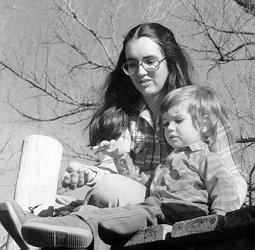
The picture at the left is my sister and my nephew in happier times. Driving in to work yesterday I was listening to a morning talk show. Host Roger Gray was interviewing the author of a book about psychiatry. The author launched into a diatribe about how psychiatry was a big fraud and there was no such thing as mental illness. The guy sounded like a Scientologist or something. It was the wrong day for that nonsense. I called the show and told the gentleman he was arrogant beyond belief and had no idea what he was talking about! The main was a trained real estate professional for crying out loud! 

 Roll back 8 hours - it's 2 am. The phone rings. A ringing phone at 2 am is never good news. It was my sister. She'd been crying. "Ben's dead," she sobbed. The sheriff had just left her house. My nephew's body was found face down in a ditch near White Settlement. He'd been missing for two weeks. He was identified by his fingerprints and a phone number in his backpack. We won't have a toxicology report for some time, but he was only briefly out of prison and had a history of substance abuse. He hadn't been able to find a job and apparently had a fight with the guy he was living with and grabbed his pack and left the house. 

That's the last anyone saw of him till they found him beside a road. We're not sure how long he'd been there, but we're having to cremate him. They wouldn't let my sister or mom see his body. For years I've watched Ben struggle to find some sort of peace. My son suffers from bipolar disorder. He and Ben were very close and had very similar symptoms and often made the same mistakes in coping with them. It took years of working with psychiatrists, neurologists, psychologists and therapists to figure out what was happening to my son. In the meantime he lived on an emotional roller coster that constantly threatened to bring him down. He got to where he couldn't work, couldn't sleep, couldn't cope. We finally discovered a combination of medications that helped level him out emotionally without reducing him to a zombie. We had some failures and false starts, but now he's apparently doing well on his current drug therapy.

 We went canoeing together a couple of weeks ago and had a great time. Ben went through therapists, treatment centers and psychiatrists, then drug abuse and prison trying to cope with his own mental demons. He pushed us all away. He was deeply angry and didn't know why. He had a tender heart that was always getting broken. His disease killed him as surely as if someone had pointed a gun at him and pulled the trigger. He left behind a young son who will have to cope with all this some day. The two boys who grew up together. Ben lived with us for nearly two years while his mom got back into school and tried to sort her own life out. One boy found the right treatment for his very real illness. The other did not. One is alive. The other is not. To say that there is no such thing as mental illness is arrogant and ignorant beyond belief. 

I've worked with people with mental illness for 20 years. When someone tries to tell me that mental illness doesn't exist, I have no patience with them. It is cruel to tell people struggling just to cope with the consequences of a brain that is wired up wrong that all they need to do is to pull themselves up by the bootstraps. The real tragedy is when these people actually do manage to convince unsuspecting families to give up searching for an effective treatment and do some goofy herbal treatment or willpower regime or get themselves "cleared" of the evil spirits that inhabit them (the author on the radio sounded like a Scientologist and what they believe would be laughed at if you made it into a comic book plot). It's a shame that the amendment granting Free Speech protects predators, cultists and the criminally ignorant too. Ben's birthday was this week. He'd have been 31. He could have been alive and happy today if some of his friends hadn't told him the same sorts of things this crank on the radio was selling. When somebody tells you that psychiatrists, psychologists, therapists and doctors don't know what they're doing or are perpetrating a fraud, they're trying to sell you something. In Ben's case, it was illegal drugs. Please, if you have a loved one suffering mental illness, find some help for them. There are many places that can help you. Keep the following things in mind as you try to find help: 

1. Find a good doctor, psychiatrist, psychologist or therapist. They can help guide you in the right direction. 

2. If a treatment isn't working in the time that is should, TELL THE DOC!  

3. Keep track of any symptoms or behaviors. Go with your loved one and TELL THE DOC WHAT YOU ARE SEEING! Scientists need information to make a diagnosis. 

4. Be patient. Treatment is equal parts TREATMENT and TIME.  

5. Love without conditions but be able to do the hard stuff too. Remember, they aren't trying to make you crazy. They're in pain and trying to cope! 

6. Take care of yourself too. If you burn out, you won't be able to help your loved one anymore and that can be fatal.  

7. Pray without ceasing. God who could give his own son, who could save a thief off a cross, will work everything out as it should. I don't believe my nephew took his own life. The evidence at the scene doesn't indicate that. But even if he did, a merciful God is powerful enough to rescue a poor tormented soul even in the last moments of his life. Please include my family in all of your prayers - my sister especially.

Tom

Wednesday, October 05, 2005

Bad Dogs & Bicycles - Why I Care About Rural Transit

It has been suggested that my passion for rural transportation issues (particularly my opposition to ETCOG’s handling of regional service planning) has something to do with me hoping to get some money out of this deal. In answer to that charge, let me tell a story.

In 1981 I had ended my career as a parochial school teacher and temporarily taken up my father’s work as a construction hand at Brown & Root. New to the trick of working in the heavy construction industry, we miscalculated our finances the first time I moved from one job to another, and we found ourselves broke and homeless. Our old car broke down and had to be hauled away. We found a cheap farm hand’s house for rent in the middle of nowhere in Johnson County. I rode my bicycle to town 5 miles away to get groceries and rode back on narrow county roads balancing two large sacks of groceries on my handlebars dodging dogs and pickup trucks. My wife was pregnant and sick staying home in the heat of summer with no air conditioning and with two small boys. I’d been working for a week for Brown & Root at the Glen Rose nuclear power plant and it was an 85 mile round trip commute to work. We couldn’t even afford a phone.

My day went like this. At 4:30 AM I got on a bicycle and rode through the pitch dark on back roads and Farm to Market roads for 5 miles into Joshua – dodging several large vicious dogs who found it amusing to chase the fool in the hard hat and work boots rattling past their turf with the big clanky lunch box balanced on his handlebars. There were two Rottweiler's that got particularly pleasure by streaking across the yard in absolute silence and then leaping the fence with a roar in an attempt to startle me and knock me off the bike. I assume they viewed my early morning passage as an opportunity to snag a light early morning breakfast (I was much thinner then, what with all the healthy early morning cardio-vascular exercise I was getting). There were long stretches of road that were pitch black (you couldn't see the rattlesnakes that like to stretch out on the warm asphalt at night - those big squishy bumps you'd go over in the blackness were a particularly thrilling element of the old daily commute). It was a frightening, exhausting and humiliating trip. Passing farmers laughed and pointed. It took me an hour to pedal to town.

In Joshua I chained my bike to a light pole and boarded an old school bus some guy had. We paid him $20 a week to share a ride. We rode for another hour or so to get to Comanche Peak. At the end of long, exhausting day of hauling steel plates and huge metal struts from the storage yard to the containment building, I got back on the bus rode back to Joshua, got on the bike, set out cross country, dodged the dogs and pickup trucks and reached home to find my wife sitting in the front yard, holding the kids and crying because she’d been alone for 13 hours and was too sick to be able to fix the kids supper. She'd come outside to wait for me because she heard the dogs going nuts up the hill and knew I was almost home.

A few weeks later, she had the baby. I left the hospital at 3:00 AM, walked from South Fort Worth to Burleson, hitchhiked to Glen Rose (48 miles) and turned around and came back the same way to sit with her in the hospital. When she got home, I went back to riding the bicycle until someone stole it while I was at work. It took two hours to walk to Joshua and two hours to walk back home (the dogs were even more of an interesting challenge on foot). Finally I bought an aged Ford Maverick that lasted just long enough for us to get on our feet again. I went to work for a nonprofit organization the next year working in my field of expertise once again and have been working in the nonprofit/human service field ever since.

So, when I hear stories of little old ladies hitchhiking to Wal-Mart, colonia’s families handing over $80 worth of food stamp purchases to predatory van drivers for a trip to the grocery store and elderly couples being told they would have to build a circular drive in order to qualify to be picked up by rural transit I see a little red. When a small town council member tells me how desperately families in her town need rides to work and can’t get them and then a certain rural transit district manager tells me deviated fixed routes and commuter bus services are not practical/not doable and then I meet a provider in another region of East Texas who tells me they’ve been successfully doing deviated fixed routes for more than a year……

When a certain rural transit director stands up in a public meeting and says, “We don’t have to make our customers happy, they have to make us happy in order to get a ride!”.....

When we work for 5 years to get a JARC grant that a certain rural transit director told us would be useless and unusable and then, despite predictions, we actually get it and it’s usable after all and we realize we could have got a similar one for our rural counties with a little cooperation from that same rural transit district…

And when ETCOG spends 9 months working on a framework for regional service planning without inviting a single consumer side representative to the table effectively blowing a priceless opportunity to do regional service planning right, appoints itself lead agency without a general consensus, issues a premature self-serving RFP, and in the process endangers the brand new transit funding we all worked so hard to get for them by scoring zilch on their performance measures….

Well, I get just a teensy bit NUTS!!!!!!!!!!!!!!!!!!!!!!!!!!!!

You can see why I have an interest in transit issues now!

It’s not because of any money I hope to get.

It's not about contracts.

It’s about those damned dogs!

Tom King

Tuesday, October 04, 2005

Advocacy


Sometimes it’s time to stomp & swear
Sometimes it’s time to cry
Sometimes you must a lion be
And sometimes just a fly……

Tom King

Monday, October 03, 2005

Lawyers, Sweet Potatoes and Fuzzy Wuzzy's

All is not always as it appears.
I was threatened with a lawyer today for something I said. The person doing the threatening had missed my point entirely and assumed I was being critical of her. She assumed things about me that were not true based probably on her own experience of how things work out there in the "real world".

She's one of those folks who have managed to figure out the intricacies of one or more of the "good old boy" networks that are pervasive in Texas politics and local government. Membership in these networks is seductive and can lead you to believe that this is "the way things really are". I've seen the same thing happen to people who work in Austin and Washington. They get inside the corridors of power and make assumptions about "how things really are" based on their knowledge of the inside workings of what is, in essence, a closed society.

These systems are like tightly knit families. As sociologists will tell you, tightly knit families have advantages and disadvantages to those within them. First, those families create a paradigm or 'worldview' that is very powerful. Everyone is under pressure to see things the way everyone else does within the system and the system pressures its members to avoid doing anything to upset the system in any way. In exchange, the members of the group are well cared for and loved and protected. But they also give up some freedom of thought and independence of action as well in exchange.

I've been operating outside the "system" a lot lately - rattling the cages, saying things nobody's supposed to say (at least not out loud). There was the children's story about the "Emperor's New Clothes" in which a little child was the only one not so imprisoned by the mores of the empire's closed little society that only he, in his youth and ignorance of propriety, could point out that the king, was in fact, naked. The story points up the problem of how often the "way things are" isn't really the way things are at all, only how things are here because we let them be that way for our own purposes. It also points up how easily we are defrauded by people who use the system for their own purposes as the emperor was in the story.

A missionary once went to the land of the Fuzzy Wuzzy's (it's probably not politically correct to call it that anymore, but this is his story). He went to church one Sabbath with the Fuzzy Wuzzy children and to his consternation, found that the children had all apparently brought snacks to church, for each carried a sweet potato in his hands. He felt he should teach these heathen children that they should not snack in church as though it were a movie theater, so he posted himself at the back of the room and prepared to pounce on any child that attempted to break open his potato for a quick bite during the hymn singing.

But the children sat stone still throughout the singing. Then the story telling started and the missionary sharpened his watch upon the tiny worshipers, but still the children held tightly to their potatoes and no one even licked his fingers during the story. Then, the deacons were called forward for the offering. The missionary shoved his hands into his pockets and withdrew some bills and change and prepared to demonstrate to the gathered children the proper way to lay your offering in the collection plate.

Only the deacons didn't bring offering plates forward. They brought five gallon metal buckets. Mystified the missionary watched the buckets begin their journey down the aisle.

Thunk, thunk, thunk went the buckets as the children tossed their sweet potato offering in. What a marvelous drumming noise they made and the children sang softly in counterpoint to the bucket music. When one of the buckets finally came to the missionary, he looked confused and finally tossed in his dollars and his change. His offering made a pathetic little plunk and flutter. Several nearby children tittered as they noted his embarrassment.

The missionary remembered what he had learned and whenever he attended a Fuzzy Wuzzy service thereafter, he always remembered to bring his own sweet potato.

We see what we want to see and we hear what we want to hear most of the time. It's easier that way. Seeing what is truth and hearing what is really being said are difficult things to do. Sometimes to be heard we have to bring sweet potatoes to the table if we want our listeners to understand. At other times, we just have to shout it out loud that the emperor is naked. The trick is figuring out which way works best in any given situation.

It's tough being a missionary.....or a little boy!

Just one man's opinion....

Tom King

Monday, September 19, 2005

Peter, Paul and George

I watched a Peter, Paul & Mary documentary last night. I loved their music when I was young and still do now. My wife looked at me skeptically. “We have nothing in common with those people now,” she pointed out. “They’re are all Democrats.” Actually, even though I’m a hard down conservative (which is not the same thing as a Republican by the way), I do have a lot in common with that odd collection of befuddled old liberals on the tube last night, fervently singing their anti-war and protest songs.

- We agree that war is bad for children and other living things and should be avoided.
- We agree that racism is fundamentally wrong.
- We agree that people should not be hungry.
- We agree that children should be treated with care and respect.
- We agree that we should treat everyone the way we want to be treated.
- We agree that life should be fun.
- We agree that the past is important and there are many things we can learn from it.
- We agree that the future is in our hands to shape.

What we disagree on is the method for accomplishing that goal. I am an advocate. Most of my colleagues in advocacy are liberal Democrats (with a capital “D”). I am a conservative (with a small “c”). I often vote Republican. I listen to Rush Limbaugh AND PBS. An accountant friend of mine once said I should spontaneously combust from the sheer contradiction of my beliefs.

The problem is he does not understand my beliefs. He is in exactly the same state as the radical right wing Republicans he openly despises. He believes he understands his opponents. He assigns motives to them believing they must, in fact, be evil people since they have not all joined the Democratic party, ergo they evidently disagree with his fundamental beliefs since if you agreed with those beliefs, you would surely be a Democrat.

In working over the past 4 years to help make sure that East Texas seniors, people with disabilities and low income families have access to the transportation resources they need to live, work and play alongside the rest of us, I discovered that some of my best allies were elected conservative legislators, senators and congressmen. I also discovered that my liberal buddies often had no clue as to how to talk to these folks. To be fair, they could not fathom why anyone had elected conservatives to public office in the first place, so it’s likely they aren’t terribly invested in understanding people they believe were elected either accidentally or under false pretenses and who will surely be thrown out when the American people wise up.

Sadly, believing they are so far apart from the new majority party, they have become every bit as intolerant in their own view of conservatives as they have long claimed Republicans are intolerant toward them. The anger they bear toward the very people they are asking for support has gotten in the way of their attempts to accomplish what they want to in the state legislature and congress.

Ultimately, both liberals and conservatives really do want social justice however differently they view the proper path toward that justice. A popular quote that has been used a lot lately illustrates how we agree on the ends, but not on the process. An African proverb, widely quoted of late says that it takes a village to raise a child. Liberals assume that the village is either national or global in scope. Put enough money in the hands of a large government entity and very smart people are expected to figure out how to make everything okay for everybody. To a conservative, that proverb means literally that the raising of children should be decided at the village level. It doesn’t say it takes a congress to raise a child or a UN summit. Instead conservatives like me believe that local people getting up out of their chairs and going to work on local problems is the best way to solve those problems.

That’s where I come down. I’ve discovered that it is extremely difficult to tease a workable solution for a local problem out of the federal government. It’s difficult to get the state to allow sufficient flexibility in its programs to create solutions that work at the local level. Sure they throw fat grants at problems, but by the time they get to Flint, they’re hedged about with so many restrictions and paperwork requirements that many of us just leave the money on the table as not being worth the trouble it takes to get it.

Public Transportation in Texas is a prime example. East Texas has been short changed for decades on the funding we get for transit, largely because we’ve done a lousy job of articulating what we need here. We’ve lacked the expertise, the lobbyists, the organization needed to get what we needed back from the government we entrusted with our tax dollars in the first place. So we’ve just kept on sending our taxes out and they kept on sending the money on to someone else. What comes back to us is so hedged in by rules and regulations that we wind up with rules that only allow transit companies to take people to doctors appointments and force them to make a separate trip to take the same person to the grocery store because the funding wouldn’t allow us to do both things on the same trip.

That kind of stupidity results from trying to solve local problems from Washington, DC. You have to create such a rigid structure in order to make federal programs “fair” to everyone across the nation that you wind up making it impossible to create anything but cookie cutter solutions when the programs reach the communities they’re supposed to serve.

Then, there are the hideous bureaucracies you create when you run programs out of Washington. We send the feds a dollar for food programs but it’s unlikely we get even half of that money back. The rest goes somewhere else or gets eaten up in salaries for the entrenched layers of bureaucracies in between Washington and Tyler, Texas. It’s an absurd way of doing social programs.

I believe we’re in the middle of a paradigm shift in government and nobody’s talking about it except conservative ideologues like Limbaugh and Hannity. Few people even understand that it’s happening. There is a movement underway to reduce the size of government that began in earnest when Ronald Reagan was elected in 1980. It confuses Republicans and Democrats alike, both of whom really do like big government when you get right down to it. What local communities don’t realize is that as federal and state taxes are successfully reduced, we are going to have to start taking over some important jobs like fighting local poverty and feeding the hungry and helping people find work at the local level. We can do it better here anyway!

My liberal friends don’t trust us to do it locally. It’s easier to fight the good fight in one place (Washington) than it is to fight it in hundreds of thousands of communities. Washington is a seductive place. All those statues and monuments and armies of young interns in black trench coats busily making connections and running government; all those huge granite buildings with all those heavy brass fixtures and wood paneling; all those statues – makes you think that somehow if you can just figure out how to work this town, you can do great things.

Those who have been seduced by the romance of working in Austin and Washington, would do well to remember that Martin Luther King started in the projects. Ghandi started in South African bodegas and Indian villages. The American Revolution wasn’t won in London!

I really believe that the successful activists of the future are going to be more and more conservative, more local in focus and each of them is going to increasingly have to become a lobbyist for his constituents and not for any specific party. Parties come and parties go, but as Jesus said, “The poor you have with you always.” Solutions for what we do about that should come from local government, faith-based communities and community based social service organizations that are based and funded as close to the village level as we can get them – shorter chains of bureaucracy that way.

The Democrats, unfortunately, haven’t figured that out yet. These arguably brilliant grass roots organizers ought to spend their time organizing local groups in solving local problems instead of busily busing them all to Washington DC. I tell you what - a mayor is a whole lot easier to intimidate than a president. When they figure that out, maybe the Democrats can once again become the party that it once was; a party that as Ronald Reagan pointed out, left most of us a long time ago to go off and play politics in Washington.

Tip O’Neill understood the point if not the application when he said, “All politics is local.”
Republicans are ahead of the game right now in figuring that out for the first time in history. I once did a fund-raiser in which I spoofed the upcoming presidential election by charging people to throw a pie at the candidate of their choice (or non-choice as suited the pie-thrower’s fancy). Volunteers wore Al Gore and George W. Bush masks and posed for cream pies. I asked representatives of both parties to volunteer. The Republicans got the joke! They brought a whole crew and ran the booth like carnival barkers. George W. Bush got 122 pie votes that afternoon.

When I approached the Democrats to help out in the booth, the county coordinator looked at me in horror and said, “You want to throw WHAT at the vice-president?” They refused to participate in such an undignified thing and as a result, Al Gore got creamed in our little pie poll. When a party loses its sense of good humor, it’s in BIG trouble. Don’t get me wrong, here; some of my closest friends are Democrats (big D). We’ve done a lot of good work together. But these guys need to lighten up a little. The caustic humor of Al Franken and Whoopi Goldberg is not serving them well. They’re getting creamed by guys like Rush Limbaugh and a growing number of new, more conservative humorists who have seized the public stage and are holding on to it by actually being funny rather than merely nasty.

When people accuse President Bush of being the most divisive president in history, they evidently haven’t come to my little village. As governor and then president, his policies and speeches actually united the folks in my neighborhood (except for one old crotchety guy from Massachusetts and none of us like him anyway and several of us have invited him to move if he really felt that way about the rest of us!). Just because liberals don’t like Bush and it makes them mad that he got elected TWICE, doesn’t make it true that he’s the most divisive in history. They said that about his two predecessors. Heck, I said that about Clinton! But, that’s kind of like when you were four years old, complaining that “Little Freddy made me mad!” because he got the last cookie. Hey, somebody had to get the last cookie! Get over it and figure out how to play nice.

...and I'm talking to myself too.

Just one man’s opinion….

Tom King

Tuesday, September 13, 2005

Wait for Me I'm Your Leader - Part Dieux!

TYLER, TX: A message was sent to members of Greater East Texas Transportation Alliance (GETTA), a public transportation advisory group for TxDOT Tyler District. I am a member of that group and so received the letter.

East Texas Just Transportation Alliance’s draft response is highlighted in bold blue italic after each section of the letter. ETJTA members and anyone else who wants to should add any comments they have via the “comments” tab below. This will help us revise and extend our remarks for publication in other formats. In no way do these comments intend to suggest that anyone who wrote a letter of support or participated in the regional planning process as conducted by ETCOG is doing anything illegal, immoral or even fattening here. Signing a letter of support is something we all do. I've signed letters of support for competitors for a grant because I felt either would do a fine job of it. We merely feel that the process so far is flawed and needs to be done right or it will cost the whole region in dollars, efficiency and badly needed transportation resources for the future.
------------------------------------------------------------------------

From Roxanne:

WE have been hearing some things from throughout the State that I would like to clarify.

The first is that ETCOG has designated themselves as the Lead Agency for the Coordinated Transit Plan. This is clearly not true. ETCOG has received Letters of Support, from various agencies, indicating that they support ETCOG as the Lead Agency. Some of the agencies are the City of Tyler MPO, Tyler Transit, City of Longview Transportation, City of Longview MPO, Texas United Mounted Peace Officers Association, TxDOT Atlanta District Engineer.

This is not clearly true either. It’s murky as a New Orleans Mardi Gras fountain! The two MPO’s and their partner transit agencies were both invited to the planning process by ETCOG in December 2004. The Mounted Peace Officers received the benefits of a recent transportation project in their county and it would have been impolite to say no. The Atlanta District Engineer doesn’t have a clue that anyone objects to it, so she signed a letter of support. Not surprising.

All these letters were REQUESTED by ETCOG and those who signed them were a small group with one token human services provider included for show. For something this big and this important, ETCOG should have lots more folks than that signed on and not just through a letter of support request. Letters of support are often a “You scratch my back, I’ll scratch yours” process anyway and prove little or nothing, especially if the signers are at all beholden to ETCOG in some way or other.

Also, Roxanne doesn't mention GETTA as one of the supporting entities, although in the letter to TxDOT's Tyler District they claim that GETTA supports their leadership. I’m on GETTA and I don’t remember that vote at all! She also doesn't mention that some at Tyler and Longview Transit have suggested retracting their letters of support on the grounds that such letters were "premature".


The ETCOG Executive Committee has passed and signed a Resolution supporting ETCOG as the Lead Agency. The Executive Committee is comprised of local elected officials from the entire 14 counties, all of which are offices we are to invite to the Coordination Planning Effort.

Roxanne does not mention that ETCOG's board and all other "supporters" were garnered in discussions completely controlled by ETCOG staff and conducted behind closed doors, i.e. no real discussion or community consensus building occurred.

ETCOG has been giving it’s Executive Committee the mushroom treatment for many years. Many of its members and former members are concerned that the information they are often given by the COG and upon which they have to make decisions may be incomplete or inadequate or even slanted to support ETCOG's position. If the presentation on Regional Service Planning at the regional transportation summit last month is any indication of how they presented it to their executive committee, then the execs certainly didn’t have a clear picture. A person without prior knowledge of what Regional Service Planning is actually supposed to be and who understood the potential consequences for screwing it up, would have assumed from what they were told in the breakout session that the state had anointed ETCOG as the lead agency based.

This is NOT true as I pointed out at the summit. The decision on lead agency should by made by a consensus of the community which it clearly was not. This "consensus" building process went more like “Whew, we got that vote done and they didn’t even ask too many questions!” (insert High Five here)

Also note the future tense of the last sentence. They ARE going to invite the 14 counties to the table. Eight months into the process and they haven’t done it yet. So, what’s wrong with this picture?

I've discussed this with TxDOT staff in Austin. I asked them what other agency in East Texas has stepped up the plate to take on the roll of Lead Agency. She mentioned maybe the local MPO's. That would be Longview or Tyler MPO, they have already stated they were not interested in being the planning agency for the 14 county region. We received a letter of support from each of these MPO's.

Roxanne mentions that she talked to TxDOT’s PTN staff, but doesn't mention that the Tyler District held its own meeting on regional service planning because they do not think the public has been involved and find that an unacceptable response to their commission's charge, nor does she mention that PTN refused to intervene on ETCOG's behalf when they complained about the meeting being held at all!

Is anyone out there aware of an agency that wants to be the Lead Agency? If so, we have not heard from them.

There’s a reason for that. As long as the only people you’ve had at the table were people you invited, who depend on funding from you in some way, either directly or indirectly, nobody is going to buck you if you make yourself captain of the football team - especially if you claim to own the football!

I can name several agencies that could lead including the Workforce Development Board, The Regional Mobility Authority, any one of a dozen large nonprofit agencies, The Economic Development Councils (could form an advisory board to lead out)….

The COG has worked on regional service planning for 8 months and all they’ve come up with so far is:


  1. We’re the lead agency and we’ll decide who gets what money (that’s essentially what the RFP process is for).
  2. We’re going to hire a consultant and decide what we want him or her to do
  3. TxDOT should pay for the consultant

Meanwhile, other COG’s have released draft regional service planning documents that include the work of 20-50 agencies and individuals who reached a consensus as to who should lead, who should plan, whether they wanted to hire a consultant, what they want the consultant to do and built a framework on which inclusive regional service planning could take place. All I can see that ETCOG has done is stewed for 8 months over how to do regional service planning without running the risk that the communities served could do something the COG didn’t want them to do.

If you don’t tell people what you’re up to, invite them to the table, include them in the discussions, who do you expect is going to be clairvoyant enough to call you up one day and suggest a lead agency? ETCOG HAS proclaimed itself lead agency (which is what the ETCOG resolution did and don’t give me any BS about the COG board being diverse – it’s not the same as having substantive discussions ahead of time with people who disagree with you actually in the room).

The second thing is that ETCOG is putting the plan together and not involving Local Stakeholders. I believe that this is coming from the fact that ETCOG, the City of Longview and Tyler have gotten together and are issuing a Request for Proposal. Someone is misconstruing this as a step in the Regional Coordination Plan. It is not. It is an Administrative Function that will bring a third party on board, a Consultant, to facilitate the Coordinated Planning process. The Consultant will also perform some other Scopes of Work that are identified by the ETCOG, Longview and Tyler.

Okay, first, let’s get the terms right. It’s a regional “service” plan. This includes coordination, but is more than that. It includes decisions about leadership, relationships and inclusion of communities in the planning process. We are not supposed to be producing another of those “Coordination” Plans that wind up being all about moving buses around more efficiently. It has to include elements that address how the system reacts to things like economic development, disasters, population boom or bust and public demand. If you only want to move buses around, you only invite transit people to the table and you write a scope of work for the “consultant” that gets what you want and only what you want. It seems very important to the COG to design the scope of work BEFORE they consult any non-transit providers. If they do that they can keep the consultant from meddling where they don’t want him to meddle (even though the community itself might well want a little meddling there).

The Solicitation process we must follow requires that ETCOG be accountable for all steps of the process and that persons involved in the process are knowledgeable of the rules we must follow. It is not that this RFP process is secret, but it is sensitive. An example of the sensitive nature of the information would be the Medicaid Transportation RFP that TxDOT is currently working on. Over the last couple months, at meetings I have attended, questions came up about the Medicaid Transportation Program and changes that might be made. TxDOT informed everyone that they were in the middle of putting an RFP out on the street and they could not discuss the Medicaid Transportation Program at all. We as operators were not offended by this, we are aware of the sensitivity of the process and we know that TxDOT cannot comment on or discuss the RFP.

ETCOG-speak for “This stuff is just way too complicated for you rubes, so you should just stay out of it and let the pro’s handle things for you.” I find that patronizing and offensive. There are lots of folks out there with pretty solid skills in community planning and transportation issues that they haven’t seen fit to include in the process. They’ve certainly never invited me and I represent rural East Texas on the state Public Transportation Advisory Committee.

ETCOG wants to create an RFP process that we may ultimately decide we don’t even need (if anyone else is ever allowed to comment on that subject). Other COG’s have done a great deal of the work using resources within their own communities and done some damned fine work in the process. When communities participate in the process, they invest in the process. If they don’t, they keep their dollars in their pockets. So far, only Tyler and Longview and Mini-Bus were invited to be a part of the process. If I were Marshall, Kilgore, Henderson, Rusk, Jacksonville, Athens, Canton, Mineola or any one of the dozens of other towns and communities in the 14 county region, I’d have to wonder why this has gone so far along and no one has talked to me. ETCOG has a couple of highly trained community development people on their staff. Why haven’t they been beating the streets and roads talking to local communities, hosting little public forums and fact finding meetings out there, trying to find out what they need and, more importantly, what resources these communities could contribute to the regional service planning process?

Roxanne does not mention that anyone and everyone that wishes to can have as much public involvement as they want in scoping a project prior to actually posting an RFP, but that this process is specifically designed to secure ETCOG's lead "status." She doesn't even mention that the money they are likely to use is funding that is supposed to be used for services, not planning.

Once ETCOG puts the RFP out on the street, unless people attend the Pre Bidders Conference, we will not be able to answer any questions about the RFP to anyone. This is to ensure that potential bidders/proposers are not given information that is not shared with every potential bidder/proposer.

AT LAST – BEHOLD THE FINE PRINT! To translate - once they get an RFP done, they won’t have to answer any uncomfortable questions – the famed “That train’s already left the station” Principle. This only looks more and more secretive and underhanded the more they “explain” it to us simpletons.

One other thing the RFP would do is confirm ETCOG in the role of lead agency. Could that explain the rush to get the RFP done?

There are other COG's who are going to hire Consultants to help them through this Regional Coordination Planning Process.

Ah, yes, the old "But Mom, everybody else is doing it!" argument. Well, in most cases, the decision to hire a consultant was made by a team of dozens of local participants from a wide range of backgrounds (not just transit providers) and it was made out in the open with everyone participating. Questions were not given the bum’s rush. Agenda’s were not tightly controlled by a lead agency that had every reason to “control” the process. Most of those COG’s were not transit providers themselves and could, therefore, be neutral since they didn’t have assets to protect. ETCOG’s extraordinarily tight relationship with Mini-Bus, essentially makes the COG the provider.

If anyone has any questions or concerns please call me.

Call soon and call often…

Roxanne McKinley,

CCTM Rural Transportation Manager - ETCOG

903-984-8641, ext 217

CONFIDENTIAL INFORMATION: The information contained in this transmittal and accompanying documents is protected by both state and federal law. This information is intended only for the use of the individual or entity named above. If you are not the intended recipient, you are hereby notified that any disclosure, copying, distribution or action taken in reliance on the contents of this transmittal is strictly prohibited. If you have received this transmittal in error, please notify the sender immediately to arrange for return or destruction of these documents.

The authorized recipient of this information is prohibited from disclosing this information to any other party except as may be permitted by law, and is required to destroy the information after its intended purpose has been fulfilled, unless otherwise permitted by law.

I’ve already discussed this puppy (see “If You Tell Anybody, I'm Gonna Sock You!”)


SOME FINAL QUESTIONS OF OUR OWN PROVIDED BY JTA DIRECTOR GLENN GADBOIS:


1. There is not a requirement to have a consultant in place by October, in fact most areas are waiting until they figure out where the money will come from and how much is available, so why the hurry in East Texas?

2. Where exactly is the money coming from to pay for the RFP and is it budgeted already? What happens if this money is not available for the RFP, will ETCOG cover the expense with its own funds?

3. Would ETCOG be willing to follow the Capital Area model (in which one entity funds the contractor, ETCOG in this case-the Austin District in their case; but a technical steering committee of stakeholders manages the development of an RFP, selection of a contractor, and management of work)?

3. What exactly was communicated to the ETCOG board, to the others, when they voted (please provide in writing)?

4. If there were another entity that could serve as lead and the preponderance of community interests in an open meeting chose the other entity to serve as lead, would ETCOG support the decision?

Thanks for wading through all this. Please put in your two cents worth. Your contribution to our strategy on this issue could be more important than you know.

Tom King
Coordinator, East Texas Just Transportation Alliance

Thursday, August 25, 2005

At Least Someone's Getting It Right

Evidently, while we were having a regional transportation summit in East Texas, Texas Association of Regional Councils (TARC) was having a statewide meeting in Austin at which several of the COG’s presented their work on regional service planning. I was particularly impressed with Austin COG’s Plan for Regional Service Planning.

Note a few things:
  1. While the CAPCOG (Capital Area COG) serves as the financial administrator, they are, by no means, the decision-makers.... see the Steering Committee. The CAPCOG does not provide public transportation services, nor contract them.
  2. The tasks are not bundled together for any one or more consultant(s) to do, but to save money, they are "farmed" out to those existing agencies/staff with expertise so they can be done in-house with only those pieces that cannot be done with existing agencies proposed for contracting;
  3. The decision-making is in the hands of a number of interested parties, not solely vested in any single agency;
  4. The process of developing this plan has been open and public with TxDOT, providers, advocates, and others at the table from the very beginning. No less than 27 agencies, organizations and individuals helped to create the planning process.
  5. They already have a detailed 23 page document (which I would be happy to share with anyone who’d like to see how it can be done well) called "Strategy for Preparing a Regional Transportation Coordination Plan". It’s wonderfully done and a tribute to CAPCOG’s leadership and willingness to include everybody that ought to be there in the process. JTA’s own Glenn Gadbois was on the planning group as well a my good friend and sometime sparring partner, Dave Marsh of CARTS as well as folks from the whole spectrum of transportation stakeholders.

I’ve also got a copy of Jim Reed’s Powerpoint about regional service planning at TARC that had some really heartening things in it. Jim is from Central Texas COG and they’re also working along the same lines as CAPCOG and North Central Texas COG. I wish ETCOG’s regional service planning team could have been there!!

For those of you who heard the rumor following last week’s summit that I am interested in some sort of paid consulting role in ETCOG’s regional service planning process, I’d just like to assure everyone that it’s a danged lie! Neither JTA not ETJTA nor myself have any intention of accepting or seeking TxDOT or ETCOG funding for providing transportation or consulting in the planning of services. To do so would impair our ability to speak out when we believe the consumers of East Texas are not being well-served.

Also, I’d like to point out that I am not the only person or organization who is "disgruntled" by the way the regional service planning process has been handled thus far. I’ve been characterized as some sort of lone crank who can be safely marginalized because I’m mad that I’m not getting money out of this deal. It’s an old charge and has never been true. Other advocacy groups and non-transit providers have also noticed that their constituents have yet to be represented at the table, despite the fact that a scope of work for a hired consultant is already being written. Some also spoke out last Friday. Perhaps none as stridently as me, but if you look at just one aspect of the planning process it becomes very clear why I’m a little cranky. If you compare how many varied groups were represented in the CAPCOG planning process (27) with the number of members (all transit providers) in the ETCOG version (4) the issue becomes plain .

Because I have no financial interest or stake in the process (I pay for my own gas to go to meetings thank you very much), I can say what I want to without fear of reprisals. Which I did!

Yeah, I’m disgruntled. Anyone that’s gruntled just isn’t paying attention!

Tom King
www.generationstogether.com
www.charitygolftournament.net

"Arbitrary power is most easily established on the
ruins of liberty abused to licentiousness."
George Washington

Wednesday, August 24, 2005

If You Tell Anybody, I'm Gonna Sock You!

I received a copy of a forwarded copy of a posted copy of a private e-mail today which said the following in 12 point Times New Roman at the bottom underneath the signature of the second guy in the chain:

  • Confidential Information: The information contained in this transmittal and accompanying documents is protected by both state and federal law. This information is intended only for the use of the individual or entity named above. If you are not the intended recipient, you are hereby notified that any disclosure, copying, distribution or action taken in reliance on the contents of this transmittal is strictly prohibited. If you have received this transmittal in error, please notify the sender immediately to arrange for return or destruction of these documents. The authorized recipient of this information is prohibited from disclosing this information to
    any other party except as may be permitted by law, and is required to destroy the information after its intended purpose has been fulfilled, unless otherwise permitted by law.

So what in the name of the Information Highway is this all about? Does this guy really think this is going to deter people from sharing his e-mails with anyone they think ought to see it too? Let’s look at it piecemeal….

  1. "...is protected by both state and federal law.” Uh, huh. And how is it protected? The only federal law I could find are some vague things that prohibit people from stealing e-mail from your computer (unless the owner of the computer is your employer and owns the equipment you’re e-mailing from). There is, as far as the legal reviews I read this morning go, nothing that prohibits you from forwarding any e-mail that someone sends you unless you have a prior written nondisclosure agreement with that person. Of course, if that person or entity gives you money or does business with you and they find out you shared private e-mail communication with someone else they can quit doing business with you or something like that, but as far as I can tell, you won’t go to jail.
  2. “...you are hereby notified that any disclosure, copying, distribution or action taken in reliance on the contents of this transmittal is strictly prohibited.” Ya ha! You can say that, but is there anything you can really do to stop it. Besides, the organization that sent this is a quasi-government entity and is subject to the Freedom of Information Act. Trying to maintain that their communication about anything other than maybe employee salaries or stuff covered under the HIPAA Statute is privileged is laughable. If they are sharing genuinely confidential stuff, however, they better have a confidentiality agreement with whoever they are sharing it with. I think anything available under the Freedom of Information Act is fair game. What do you think? Talk amongst yourselves……
  3. “The authorized recipient of this information is prohibited from disclosing this information to any other party except as may be permitted by law, and is required to destroy the information after its intended purpose has been fulfilled, unless otherwise permitted by law.” Which, without a prior nondisclosure agreement between you and the person who accidentally sent this puppy to their entire e-mail list, you don’t have a legal leg to stand on. In short the disclaimer pretty much means zip! And since I’m a packrat (just ask my wife), I ain’t destroyin’ nothing that’s juicy enough to need this disclaimer on it.

Ultimately, the gentleman who posted the e-mail with the long disclaimer would have been better served if he’d merely asked (politely) if the recipient would keep it to him or herself. E-mail, like handwritten notes or any other printed or electronically generated information goes out there and whether it goes to someone who wasn’t supposed to get it or not, depends on whether the recipient wants to keep your secret or not. The poster above could learn a lesson from journalists and PR people. To wit, these guidelines:

  1. Loose lips sink ships! Anything you say can and will be used against you in the newspaper or on radio, TV and the Internet. So be careful what you say! Don’t spout off unless you want to be quoted.
  2. There is no “…off the record”. Unless the reporter is prepared to go to jail for you, you are going to get found out. If you send a note with a disclaimer like the one above to someone who thinks you’re up to no good, how long do you think your note is going to remain private? About as long as one of those “Don’t tell anybody else, but I heard…” stories that buzzed around school like a prairie fire back in 7th grade.
  3. Threats you can’t carry out against people who know something that can hurt you only make those people more likely to rat you out! Unfortunately, Enzyte doesn’t make a “natural credibility enhancement” pill you can take to recover from this one.

As Leyden (1995) observed (http://uwadmnweb.uwyo.edu/COJO/WILTSE/privacy.htm) :

  • Cyberspace is not all that different from the everyday world. The same law-abiding people who stop at traffic lights are navigating the electronic terrain. The force that stops someone from tearing open a letter or bill or check delivered through the U.S. mail is not the flimsy envelope: It's purely social convention and the vague threat of violating a federal law. Similar conventions and vague threats generally protect the integrity of electronic information, whether it's e-mail or databases.

But there really isn’t a standard that says, if I send you a letter, you can’t show it to other people. People will keep your notes confidential if they trust you because it’s polite to do so and if it’s in their own interest not to share the content of your communication. I have some e-mail communications that I routinely read and delete (and/or shred in the case of written notes) when I receive them because I have an agreement that in exchange for my ability to communicate freely with that person behind the scenes, I’ll never, never, share those communications with anyone else (no matter how tempted I am to do that).

If you start tagging your everyday e-mails with disclaimers like the one above you risk:

  1. Angering your friends for assuming they will blab unless you made a vague threat to prosecute them if they did.
  2. Flagging your notes as “full of juicy stuff that would be cool to spread around”.
  3. Reducing your credibility with people who know that you’re talking absolute balderdash and haven’t a legal leg to stand on.
  4. Seeming impolite for sending someone a note that obligates them to protect your secret stuff when you never asked them if they’d mind keeping your e-mail on the QT in the first place.

Did you’re Mama never teach you manners?

Just one man’s opinion….

Tom King

Confidential Information: The information in this e-mail is protected by my cousin Guido (who will come to your house and work you over with the blunt end of a summer sausage if he finds out you finked on me to the man). Anything I said in here that can be used against me in court, in the news media or at any board meeting held in the upstairs room at Rick's Blues Bar is confidential. All recipients of e-mail from me are expected to purchase expensive file shredding software and destroy this message utterly after you have committed its contents to heart. You are further enjoined not to reveal the contents of this message to anyone even if you have to die under torture to protect me. (Hey, if you didn't want the responsibility, you should never have opened this file in the first place!)

Thursday, August 11, 2005

Wait For Me, I’m Your Leader!

Who Will Be the Alpha Male in Regional Transit Services Planning?

There’s a’ gonna be a transit plannin’ meetin’ Friday and it’s not the one that East Texas Council of Governments (ETCOG) wanted. In fact:

  1. ETCOG didn’t organize it – the TxDOT District Engineer did.
  2. ETCOG apparently didn’t want anyone else to organize it either – an ETCOG official actually called TxDOT’s Public Transportation Department and told them to tell the district engineer to, in essence, “Butt out!”
  3. Those invited to attend include health and human service providers, economic development councils, civic leaders, elected officials, advocacy groups, consumers, transit providers, state officials, chambers of commerce and business people, few of whom have yet been invited to the table by the Council of Governments self-appointed regional service planners. Now in a part of the country where the “One Man, One Pickup” rule is a way of life, public transportation is not likely to get much attention, though lack of adequate alternatives to a personal automobile directly impacts one in five adults and indirectly impacts a far greater percentage when you factor in the families and friends that folks without a car bum rides from.
So, doesn’t it make sense that you should include people like the ones listed above in the planning process? Apparently not if you go by ETCOG’s historical position. Even today, when TxDOT is demanding greater community participation in the planning process, ETOCG officals are complaining that getting everyone together Friday to talk about what regional service planning looks like “gets us a little bit ahead of ourselves”.

The COG says they are already “…working on doing a plan (Longview, Tyler and ETCOG)”. Note the players. Longview Transit, Tyler Transit and ETCOG Rural Transit. All transit providers. Now, whose needs are going to be number one at that table? No offense to Ed Esparsa and Norman Schenck from Longview and Tyler respectively. If ETCOG calls, they have to answer in self-defense. And both are good faith participants in developing a plan for coordination. My complaint is not with them, but it’s the same complaint I had 5 years ago.

Where’s everyone else that should be in on the planning process? COG official comment was that they “will have a key role for the HHS groups. It wouldn't be an accurate or effective plan otherwise. But it will be a little later on in the planning process.” Like when? Why should the HHS providers inclusion be later in the process? And why is there no mention of other key players like advocacy groups like ETJTA, The Arc, AARP, TASCA and such? Where are the economic development councils? Why are we back to 3 transit providers in a room doing regional planning?

Here's what it looks like from the outside.

  1. It looks like ETCOG wants to work up a preliminary plan that first and foremost meets the needs of the transit providers. It's easier to get what you want into such a plan if you do the first draft without any pesky non-transit people involved.
  2. It looks like their planning process isn't responding to public transit needs, but rather responding to providers' need to spend the money so it uses the appropriation in a way that best benefits the providers. What happened to having a plan that gets transit where it needs to go, if the people who need to go there aren’t included in planning until after the fact?
  3. ETCOG officials in public say they are “tickled that they (the organizers of Friday’s meeting) are helping get all of the Health and Human Service groups in on the planning process”. Telling the TxDOT district engineer to “butt out” doesn't sound "tickled" at all.
  4. When someone says we're getting "a little ahead of ourselves", what I hear is "You're making us do things we don't want to do or weren't prepared to control." I would think an opportunity to touch base with an influential former TxDOT Commissioner, the chairman of the Texas Assn. of Economic Development Councils, the District Engineer, public officials and representatives from communities all over your service area, would be welcomed going into a transportation summit. Instead letters and phone calls went out from the COG encouraging people to stay away.

I've said all along that a summit cannot be useful unless you've had a whole bunch of these kinds of local working groups to prepare for it - unless, that is, the summit was designed to present us with a fait' accompli. "Here's the draft plan, guys, already drawn up. Isn't it lovely? Don't look too closely at the fine print."

Five years ago at a TDHHS public forum, I asked why there wasn't a regional service plan for transit in East Texas. ETCOG’s rural transit director stood up and told us that there was indeed such a plan. I asked who wrote it. She very candidly said, "Glory, Kay and I." That group represented Tyler Transit, Mini-Bus - which was serving Longview at the time - and ETCOG’s transit director. It’s the same group this time that did all the planning five years ago - all transit providers.

As an afterthought, COG planners say that including health and human services providers is important. Unfortunately, they don’t even mention advocacy groups, civic officials, business people or economic development folks. Frankly, a lot of people, from small fry like me to city and county officials and other major players see ETCOG as not a good-faith partner in this process. ETCOG representatives over the past 5 years that I've been involved in local transportation advocacy have on repeated occasions stood up and flat told advocacy groups, consumers, civic leaders and, now, even TxDOT officials to "Butt Out!"

The Greater East Texas Transportation Alliance (GETTA), a TxDOT organized public advisory group, was publicly told by a COG official that it should stick to only one issue – namely advising the district on 5310 funding. Basically we were told to butt out! It nearly ruined the effectiveness of that group, but the need was so urgent that we soldiered on anyway, ignoring the proffered advice. With no encouragement from the COG; often with outright discouragement, a coalition of GETTA members put together a proposal to the DOT and was awarded $36,000 to survey the transit assets of the district in preparation for regional coordination and planning.

Five years ago, members of the Tyler Homeless Coalition identified a lack of transportation in the evening that prevented many people with disabilities and homeless workers from getting second and third shift jobs. At one of those early meetings, someone stood up and asked us who had given us “permission” to organize. When we made it clear that we didn’t need anyone’s permission to discuss transit issues, the next thing they wanted to know was, “What’s the grant you’re going after (and can we get it)?” We made it clear there was no grant. All we had was a problem and we were looking for a way to solve it. Many local “leaders” lost interest once they knew there was no immediate chance of getting a grant. Pretty much from there on we were told repeatedly to “butt out” by a variety of officials, leaders and representatives of large local organizations.

We organized East Texas Just Transportation Alliance and located a grant fund we could use to support extended hours for Tyler Transit in the federal Job Access and Reverse Commute (JARC) grant. The ETCOG representative told us not to bother applying for a JARC grant because “they are useless”. ETCOG had had to send theirs back because they said the money was unusable – over $200,000 went back to the feds instead of going to increasing transportation resources.

We ignored ETCOG’s warning. It turned out that they’d actually failed to get the JARC grant in the first place (they didn’t bother trying to get an earmark and only earmarked projects got money that year). What they sent back was Dept. of Labor funding that was supposed to match the JARC money. Meanwhile, with the help of Tyler Transit, we pulled together a coalition of supporters. We went to Washington and got the Congressional earmark for JARC anyway and two years later we were part of the effort that got the toll credits for match money too. This fall, Tyler Transit's JARC project will extend the system's service hours till midnight providing transportation home for low income second and third shift workers and evening access to business, shopping and recreation for seniors, people with disabilities and tourists.

A couple of years ago, seniors and senior advocates at the annual REACH conference on aging were told by ETCOG’s transit director that "The transit provider doesn't have to make its riders happy. The riders have to make the transit provider happy if they want a ride." That statement spoke volumes about the COG's transportation department's philosophy about who they serve. Advocates in the room were appalled. Over the past decade, ETCOG has reduced the number of providers in the 14 county region to just one single closely controlled transit provider that is tasked with covering the entire region. It made the COG's paperwork a little easier, but many of us feel like it left us without the flexibility a diverse system would have offered. If we are going to meet the transportation challenges of a huge and diverse region like East Texas, it makes sense to have a lot of locally based resources, especially if you ever hope to leverage local financial support. ETCOG staff members have expressed displeasure time and again at my own participation as a transportation advocate, then later as a member of PTAC.

Meanwhile, on the PTAC, I was pushing for a new funding formula which would dramatically increase East Texas (and consequently ETCOG's) funding. The plan I advocated moves the East Texas to funding parity in far less time than the 20 years originally projected by the transit industry. At no time did I get a lot of support or help from the COG. In fact the COG supported TTA's proposal to freeze funding in place, which would have in effect drastically slowed the growth of funding for the region at a time when, although we were the second largest rural transit district, we were receiving less money than any other COG. To make things worse, the COG produced a series of awkward "Resolutions" that were presented to the Commission that frankly made the COG look greedy and out of touch. At any point, those of us who were working toward funding equity for East Texas would have welcomed the COG’s participation in the process.

Instead ETCOG often seemed to be working at cross purposes. The statement has been made throughout that the process needs to be “controlled”. Why is that? Who needs to control the process? I don’t think it’s who they think needs to control the process. And now, the COG’s message on regional service planning appears to be, "Let us fix this plan up for you and when we've got a handle on it, we'll let ya'll take a peek and make comment." ETCOG has consistently been out of step with the purpose of the legislature in passing HB 3588 and at cross purposes with the Texas Transit Commission and with the growing numbers of people in East Texas who realize that we've got to engage everybody in building a transit infrastructure. No one agency can carry all the water for transit.

There's an element of "Wait for me, I'm your leader!" in all this. If your supposed to be the leader and yet you find yourself running along behind your community saying, “this is bad timing” or that you were going to include them just a “little bit later on in the planning process” then, you never were the leader you seem to have thought you were in the first place.

Despite protestations to the contrary, the COG has not been a good faith partner in regional service planning. It is my belief that someone else should take the lead in regional transportation service planning. The regional workforce board or the Regional Mobility Authority could play a pivotal role. Whoever leads out needs to bring the right people to the table from the get-go.

ETCOG is now planning to ask TxDOT to provide them with a consultant to shepherd the planning process. That assumes that ETCOG should be in charge of the regional planning process – an assumption that I, for one, would challenge loudly. I don’t think I’ll be alone either. A consultant is not what we need. We need someone else driving the planning process.

Friday’s meeting should be interesting.

Just one man’s opinion…

Tom King