

 Posts
Posts


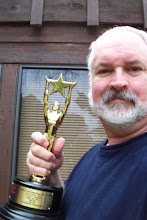


 Ever once in a while, I get riled up and rail against post-modernist philosophy. Given that the Academy of Motion Picture Sciences last week managed to lose 20% of its TV ratings for this year's Oscar ceremony after it presented another dismal panoply of post-modernists film, I thought it time to speak up again. The only Oscar winner that most of us cared about was Gary Oldman's best actor award for playing Winston Churchill in "The Darkest Hour".
Have you noticed lately that, Sir Winston has been showing up everywhere on TV and in movies. It's like there is this sudden need among people for some kind of throwback hero like Churchill to step up and lead; to do the hard things we need done that the simpering diplomats of the past 20 years have been unable to do. It would explain the 2016 American presidential election anyway and the anger over the 2020 one where we got the opposite of a leader. And I hear Mel Gibson, hot off last year's hero biopic Hacksaw Ridge, is all set to resurrect Jesus in film with a sequel to The Passion. This should drive Hollywood's post-modernist establishment to the edge of insanity, which is after all where those guys like to build their mansions.
Someone in our online poetry group on Goodreads, apparently searching for something to believe in that could guide her poetic efforts, was trying to find out what post-modernism was the other day. Sadly, I can tell her for certain that the post-modernist intellectual philosophy offers no such guidance.Which is good news for bad poets who don't want to work very hard to create poems with rhyme or reason, I suppose. It means you can write crap and still be popular with the cool kids.
To understand what post-modernism, is you first must understand modernism. Throughout man's long history, up until pretty much the 19th century, life went on for everyone. If you were wealthy or a member of the nobility, you could count on remaining so for the most part. If you were poor or one of the rare members of the middle class, life would go on for you the way it did for your father. Then, at the end of the 18th century, America came along. People who came here or grew up here discovered that they could better themselves.
Then, a technological explosion began in the early 1800s and by the time the American Civil War was done people began to believe that technology and progress could make their lives better than that of their fathers. Soon by the early 1900s, people came to believe that life WOULD inevitably get better. Philosophers, in a fit of "wait for me I'm your leader" began to preach that now that man was making strides toward the ancient fantasy of a human-built utopia, that such a utopia was inevitable and God is an outmoded concept; a crutch we no longer needed as a race.
Modernism, as a philosophy, tells us we can expect that things will inevitably get better for us than they were for our parents. Never in human history was that so. Before the era of modernism, the best you could expect was the same short life of hard labor and poverty that your ancestors lived. If you were born to the nobility, you might rise in rank if you plotted against your peers successfully and enjoy a short stint as king or emperor before someone out maneuvered you and you lost your head over the deal. Modernism, then, was the belief that you'd be better off than your folks and your kids would be better off than you. All of this was entirely too cheery an attitude to the academic/philosophical complex, who, with the help of Charles Darwin and Karl Marx, decided it was time for a change.
In order to prove they were out ahead of everybody, writers and philosophers like Nietzche, Kierkegaard and Lyotard had to come up with something more advanced and cynical (not to mention depressing). A couple of world wars helped their ideas along and post-modernism began to be advanced as the go-to philosophy in a world riddled with post-war PTSD. Post-modern philosophers began selling books to intellectual snobs who bought them in order to impress other intellectual snobs. They told these effete dandies that words mean whatever they want them to mean and that there is no such thing as objective truth. CS Lewis warned about the dangers of this philosophy in his essay, Men Without Chests which I highly recommend you read. It explains a lot about what went wrong in academia and education that brought this generation to this sad condition..
Post-modernism rejects the idea that there is any meaning in life at all. Self-proclaimed post modernists see themselves as bravely embracing the monumentally depressing idea that, not only is there no God but that there is no meaning to life at all. The mantra of post-modernism could well be "Shit Happens and Then You Die!"
The effect of post-modernism can be seen in the spate of dismal books and films put out by those educated in the last part of the twentieth century - films with no point, no plot and no happy endings. Oh, they still make the older variety because it makes money for them so they can make "important" films that lose money. It's little wonder that no one except "artists" and film-makers gave a rat's hoo-hah about the movies that have won Oscars pretty much for the last two decades. Most of the award-winning films were post-modernist exercises in meaningless misery and depression.
Ratings for this year's Oscar ceremony were down again this year and the whole thing appears to be sliding into utter irrelevance with the movie ticket buying public,
So, I think it's high time I do a little more preaching about it. Post-modernism is killing a significant portion of the movie industry even as more and more cynical producers and artistes embrace the philosophy. Were it not for less "intellectually gifted" film-makers producing a lot of throwback block-buster paeans to the idea of heroes and lives that have meaning, Hollywood would not have had the money to roll out awards for the dismal lineup of post-modernist misery that was on display at this year's Oscars. Significantly, few people saw this year's Oscar winners with one notable exception - Gary Oldman's brilliant turn as Winston Churchill, a figure most progressives despise.
 |
| Humans need to tell stories. It's in our nature to ascribe meaning to our lives and to what we do with them |
I think many of us are still modernists or old-style Christians at least. Sadly, I fear we are becoming an endangered species, though. Christianity was probably the greatest of the precursors to modernism in that Jesus taught us to believe that life has a point and that, at the very least, we should be getting better as human beings. Christians have the temerity to believe that we have a purpose and that purpose is to leave the world better than we found it. Christians have always believed that things could get better and would get better at some point. At least that's what Christians believed who were allowed to read the Bible rather than being forced to submit to having scripture interpreted by the ancestors of the post-modern philosophers, the priesthood. Fortunately those guys couldn't burn Bible printers fast enough, and the Good News managed to get out there in spite of the intellectual oppression of the medieval era.
Why is it that people who are supposed to be intellectuals have such a dismal view of life? It probably has something to do with the whole "Thou shalt be like gods," philosophy first proposed to a gullible naked woman in a garden. It's a tragedy that our university system has devolved into the sex, drugs, rock n' roll mess we currently see on campus. It's not everywhere yet, but if the philosophers of this post-modern anti-enlightenment have their way, future generations will thoroughly embrace the "Live fast, die young, and be a handsome corpse" approach to life and, I fear, the last generation of Earthlings will die with a needle in their collective arms while playing apocalyptic video games in their mothers' basements while eating Ho-Hos and drinking Red Bull.
The irony will be that the thorough-going post-modernists will only be able to do this because their mothers were pre-post-modernists and kept feeding them hoping the kids would one day snap out of their funk and become better people! But Abraham Maslow, creator of Maslow's Hierarchy of Needs was wrong. Taking care of a kid's basic needs (food, clothing, shelter) does NOT lead to self-actualization after all. It appears to lead to a profound post-modernist funk and smelly basements.
We can only hope the next big blockbuster we see will be the actual Second Coming. Otherwise we may truly be without hope after all.
Tom King © 2018, 2023


